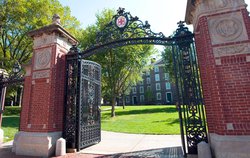
The WSJ Ranks Brown Among The Best Schools For Student Engagement
- Posted by Jesse Polhemus
- on Sept. 16, 2018


Robotics researchers wouldn’t dream of leaving the door unlocked when they leave the lab for night, but a new study shows that research robots are often left exposed in another way: unsecured on the internet.A team of Brown University researchers recently ran a worldwide scan in search of hosts running …
"I had the pleasure of graduating in two recessions," laughs Brown CS alum Harry Li '02, "first in 2002 and then in 2009, after the housing bubble burst." (He also has his PhD from the University of Texas at Austin.) Currently a data scientist, his career path will surely inspire …


There's a reason why you see "Keep Providence Eldritch" t-shirts around here. Citing our unorthodox founder, inventive puppetry, marching bands, and inimitable foodstuffs, Travel and Leisure has just named Providence the fourth quirkiest city in America.You can read the full article here.The image above is © 2018 by Craig Fildes and used with permission under …

by Rachel Markell and Elaine JiangAs college students living in a fast-paced society, we’re expected to stay informed about what’s going on in the world. And for the most part, we do. And while, sure, sometimes we join a protest or participate in a heated discussion on Facebook, for the …
Computer Science at Brown University
Providence, Rhode Island 02912 USA
Phone: 401-863-7600
Map & Directions /
Contact Us


